
Crypto fund management in Australia has grown a lot in the last few years. As digital assets like Bitcoin and Ethereum become more popular, many people and companies are looking for ways to invest safely. Fund managers now offer tools, strategies, and expert help to guide new and experienced investors through the world of crypto.
Unlike traditional finance, crypto is fast-moving and often changes quickly. This can make it risky, but it also creates chances for profit. That’s why choosing the right crypto fund manager is so important. The best ones don’t just hold your assets they help you grow them while lowering the risk.
In this article, we will explore the top 10 crypto fund managements in Australia for 2026. We’ll also look at how they work, how to choose one, what the laws are like, and how crypto fund management in Australia compares to other countries. Whether you’re just starting or already know crypto, this guide will help you make smarter choices.
How Crypto Fund Management Works
Crypto fund management is about handling crypto investments on behalf of someone else. Fund managers use tools, research, and market data to buy, hold, or sell digital assets for their clients. Some funds are active they try to beat the market while others are passive and just follow trends.
Most crypto funds are built around popular assets like Bitcoin and Ethereum. Some also include newer coins or tokens, but with higher risk. A good fund manager knows how to balance safety and growth by picking the right mix.
Clients usually pay a management fee, and sometimes a performance fee. These costs should be clear from the start. In return, the fund manager takes care of complex tasks like storage, risk control, and rebalancing. This makes crypto easier for people who don’t have the time or knowledge to do it themselves.
Crypto Regulations in Australia
Australia has made progress in crypto regulation. The Australian Securities and Investments Commission (ASIC) and the Australian Transaction Reports and Analysis Centre (AUSTRAC) both play a role. They want to stop scams, protect users, and build a safe market.
Fund managers offering crypto services must follow rules for:
- Financial licensing
- Anti-money laundering (AML)
- Client protection
- Reporting and transparency
In 2026, we expect tighter rules. This may include laws around stablecoins, token mapping, and better definitions of crypto products. These changes could help build trust but may also increase costs for fund managers.
If you’re thinking of investing in a crypto fund, ask if the company is regulated. Always read their disclosures and check if they follow Australian financial laws.
Also Read: 7 Best RPC Node Providers for DeFi and dApp Performance in 2026
Top 10 Crypto Fund Managements in Australia in 2026

Looking to gain expert-managed exposure to crypto markets in 2026? Below is a detailed guide to Australia’s leading crypto fund managers this year. Whether you’re a retail investor seeking easy access, an SMSF trustee needing compliance, or an institution targeting advanced crypto strategies, these firms provide structured options, regulated frameworks, and tailored offerings to help you participate in the growing world of digital assets with confidence.
1. Quant Matter

QuantMatter is a specialist firm that uses quantitative strategies to trade in global markets including crypto, forex, equities, and commodities. It began working in the crypto market‑making and now covers many asset types. The team builds predictive models using data and math.
They manage investor funds using trading desks with algorithmic rules. The firm aims for steady long‑term returns by balancing risk and opportunity. They provide licensed fund management services for both crypto and non‑crypto assets. Quant Matter uses careful research and clear execution to protect investor funds.
| Pros | Cons |
| Diversified strategies across asset types | May be less known in Australia than local managers |
| Quantitative and systematic trading | Limited public track record details |
| Global markets exposure | May require higher minimum investments |
| Uses licensed fund management frameworks | Primarily institutional style, not retail retail |
| Focus on risk control and model discipline | Less face‑to‑face presence in Australia |
| Investment process based on data and math | Newer in Australian crypto fund space |
| Covers crypto and traditional asset classes |
2. Merkle Tree Capital
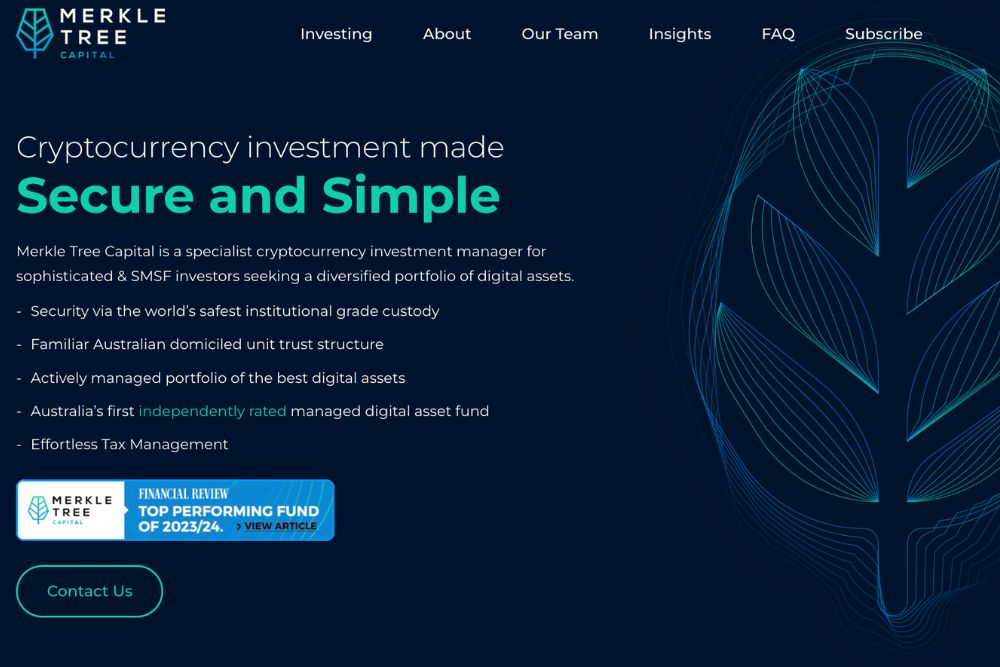
Merkle Tree Capital is based in Melbourne and runs crypto asset funds for SMSF and wholesale investors. It claims to be the first fund in Australia with an independent rating. The team offers regulated and audited fund structures.
They specialise in digital assets like Bitcoin and Ethereum. Investors can use it inside self‑managed super funds (SMSF). The fund aims to follow clear rules and risk limits. It targets medium to long term growth for experienced investors.
| Pros | Cons |
| First independently rated crypto fund in Australia | Focus only on crypto, no broader asset coverage |
| Suitable for SMSFs and wholesale investors | May require minimum fund size |
| Regulated and audited structure | Lacks crypto‑native trading strategies |
| Melbourne‑based specialist team | Less diverse strategy than multi‑advisor funds |
| Transparent fund operations | May charge higher fees for rating costs |
| Accessible for SMSF investors | |
| Focused expertise on crypto assets |
3. Portal Asset Management (Radiance Multi‑Strategy Fund)
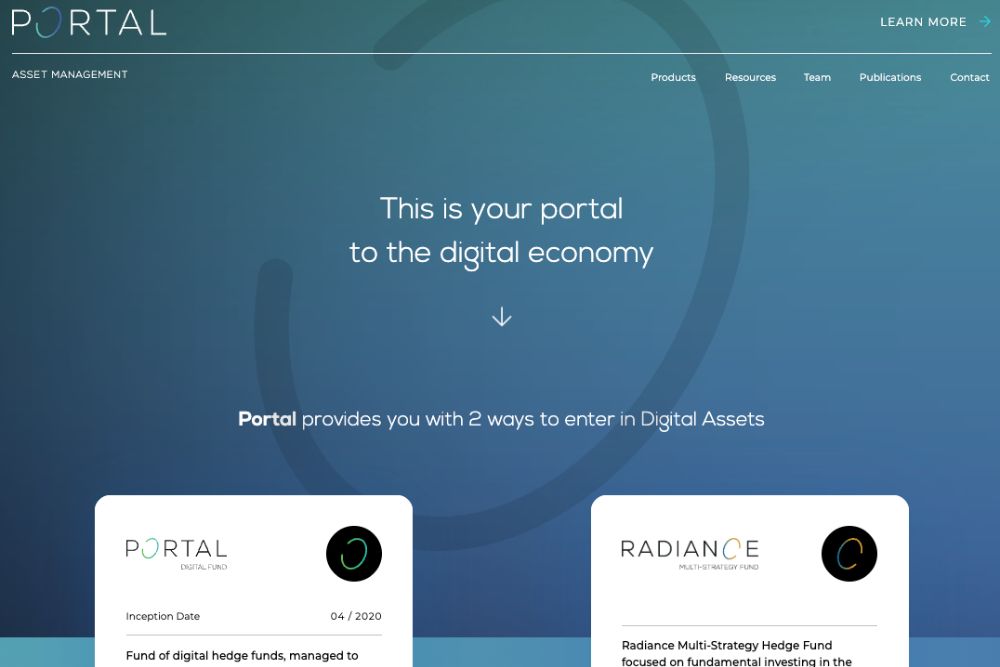
Portal Asset Management runs the Radiance Multi‑Strategy Fund from Sydney. It uses multiple advisors for diversified crypto exposure. The fund invests in global currencies, staking, yield farming, and derivatives.
It aims to spread risk across strategies and markets. Portal targets institutional and wholesale investors. The structure is designed for stability and diversification. They aim for balanced returns using multiple specialist partners.
| Pros | Cons |
| Multi‑advisor structure diversifies risk | Complex structure with many partners |
| Global digital currency exposure | May require high minimum for wholesale investors |
| Wide strategy mix (staking, yield, trading) | Less direct control over each strategy |
| Institutional‑grade fund management | Not designed for retail or SMSF |
| Sydney‑based and regulated | Fees may be higher due to multiple advisors |
| Aims to smooth volatility with diversification | |
| Professional oversight and governance |
4. Alpha Node Capital

Alpha Node Capital offers institutional‑grade access to diversified crypto strategies. It began in 2017 and focuses on wholesale investor clients. The firm builds strategies using multiple crypto products like tokens and venture exposures.
They use research and quantitative methods to select assets. They aim for returns independent of crypto price swings. It offers a regulated fund structure and oversight. The team focuses on long‑term investment outcomes.
| Pros | Cons |
| Institutional focus with wholesale access | Not open to retail or SMSF investors |
| Diversified crypto investment strategies | Crypto only – no exposure to equities or fixed income |
| Established since 2017 | May require high fund minimums |
| Regulated structure | Limited public performance reporting |
| Research‑driven selection process | |
| Aiming for risk‑adjusted returns | |
| Long‑term focus on consistency |
5. Magnet Capital
Magnet Capital is a crypto‑native investment manager in Australia since 2017. They focus solely on digital assets. Magnet manages funds with active trading and staking strategies.
They offer exposure to top crypto tokens and blockchain projects. Their team is fully dedicated to crypto markets. They use quantitative and discretionary methods. They aim to deliver returns based on crypto market cycles.
| Pros | Cons |
| Fully crypto‑native, deep expertise | No exposure beyond crypto assets |
| Active trading and staking strategies | Volatility risk inherent in crypto |
| Established since 2017 | Limited appeal for risk‑averse investors |
| Dedicated crypto team | May be higher risk than diversified funds |
| Transparency in crypto selection | |
| Targeted crypto performance | |
| Australia‑based specialist firm |
6. DigitalX
DigitalX is listed on the ASX and manages regulated digital asset funds. They also offer the BTXX Bitcoin ETF. Their funds are available to retail and wholesale investors. DigitalX combines traditional fund structures with crypto exposure.
They comply with Australian regulations and reporting. Their team handles custody and fund operations internally. The ETF provides easy access via the stock exchange.
| Pros | Cons |
| Listed on ASX – easy trading for retail investors | Only Bitcoin exposure via BTXX |
| Regulated fund and ETF structure | Limited to Bitcoin or fund token exposure |
| Access for ASX retail investors | Crypto funds still risk‑level volatile |
| Full regulation and reporting | |
| Custody and fund management in‑house | |
| Transparent ETF pricing | |
| Simplified crypto investing via share market |
7. Monochrome Asset Management
Monochrome Asset Management offers Australia’s only Bitcoin ETF (IBTC) and Ethereum ETF (IETH). Both ETFs include in‑kind redemption, which helps improve liquidity. The firm is based in Sydney and is regulated.
They focus only on single‑token ETFs. They provide an easy way for investors holding brokerage accounts to access crypto. The structure reduces capital gains tax events. They use a transparent model with low fees for execution.
| Pros | Cons |
| Australia’s only Bitcoin and Ethereum ETFs | Only Bitcoin and Ethereum – no other crypto |
| In‑kind redemption improves liquidity | ETF model may not suit all investor types |
| Low tax event structure compared to direct crypto | Requires brokerage account |
| Regulated and transparent management | Limited diversification within crypto |
| Accessible to retail investors via ASX | |
| Simple, low‑fee exposure to Bitcoin & Ethereum | |
| Sydney‑based and compliant |

The BetaShares Crypto Innovators ETF (CRYP) is an exchange-traded fund listed on the Australian Securities Exchange (ASX) that provides retail investors with access to a diversified portfolio of global crypto-related companies. It tracks the Bitwise Crypto Innovators Index, which includes businesses generating the majority of their revenue from cryptocurrency activities such as exchanges, mining, custodial platforms, and blockchain development.
CRYP was created for investors who want crypto exposure without directly holding volatile digital assets like Bitcoin or Ethereum. This ETF includes well-known names such as Coinbase, MicroStrategy, Riot Blockchain, and other global firms seen as leaders in crypto adoption and infrastructure. Because CRYP is traded like a regular stock, it’s easy to access via standard Australian brokerage platforms, making it ideal for retail investors seeking diversified exposure to the crypto economy.
| Pros | Cons |
| Easily accessible via ASX-listed brokers | Does not hold actual cryptocurrencies |
| Diversified across multiple global crypto companies | Indirect exposure may miss direct crypto gains |
| Suitable for SMSFs and traditional portfolios | Impacted by both stock and crypto market volatility |
| Backed by trusted Australian ETF issuer (BetaShares) | Management fee of ~0.67% p.a. is higher than traditional ETFs |
| Regulated and transparent, no need for wallets or private keys | Limited upside if crypto firms underperform underlying crypto |
9. Swyftx
Swyftx is a Brisbane‑based crypto exchange that manages over A$3 billion in customer funds. While mainly an exchange, they offer growing institutional offerings and custodial services. They provide services to both retail and institutional clients.
The platform includes tools for fund managers, OTC trading, and custody. They have received positive coverage in financial news. Their services support crypto investment strategies. They may partner with other managers for product delivery.
| Pros | Cons |
| Strong retail exchange with institutional tools | Not a dedicated asset manager fund |
| Large custodian and trading platform in Australia | May not offer in‑built fund products |
| Access to OTC, custody, and institutional services | No fixed fund or ETF structure |
| Well‑known and well‑funded platform | |
| Local Australian infrastructure | |
| Trusted brand among retail investors | |
| Support services for other crypto managers |
10. DACM (Digital Asset Capital Management)
DACM is an institutional digital asset investor founded in 2017. They invest in early‑stage ventures, listed tokens, and derivatives. The firm offers sophisticated strategies across multiple crypto dimensions.
They target wholesale and institutional clients. The team blends venture investing with market strategies. They operate under regulated frameworks for institutional funds. Their aim is long‑term growth across the crypto ecosystem.
| Pros | Cons |
| Institutional fund investing in early‑stage crypto | Not available to retail investors |
| Venture and token investment diversification | Higher risk venture exposure |
| Founded in 2017 with market experience | Complex strategy structure |
| Regulated institutional fund frameworks | May lack transparency for public |
| Broad crypto ecosystem exposure | |
| Focus on long‑term capital growth | |
| Experienced institutional team |
Crypto fund management continues to play a vital role in helping investors navigate the fast-moving world of digital assets. Firms like Quant Matter, Merkle Tree Capital, and Portal Asset Management each bring unique strategies ranging from quantitative models to multi-advisor structures and regulated ETF offerings.
As interest in crypto grows across SMSFs, retail investors, and institutions, the need for trusted, well structured asset managers becomes even more important. By understanding the focus and strengths of each fund, you can make smarter decisions about how to access the crypto market. Explore these managers, compare their services, and find the one that aligns with your investment goals in 2025 and beyond.
How to Choose the Right Crypto Fund Manager

Choosing a crypto fund manager is a key step in protecting and growing your digital investments. With many options available in Australia, it’s important to take your time and make sure the manager fits your needs. The right choice can give you peace of mind, while the wrong one can cost you money and trust.
Here are steps you can follow to help make the right decision:
- Check Their Track Record: Look at how the fund has performed in the past. Has it grown during both good and bad markets? A strong history can show how well they manage risk and respond to change.
- Review Security Measures: Ask how they store your assets. Do they use cold wallets or work with a trusted custodian? A secure setup protects you from hacks and loss.
- Read the Fee Structure: Know what you’ll pay. Some charge just a management fee. Others may also take a cut of any profits they make for you. Make sure the costs are clear and fair for the service provided.
- Understand Their Strategy: Is it active or passive? Do they focus only on Bitcoin, or do they invest in altcoins too? Their approach should match your comfort with risk and your long-term goals.
- Look for Regulation: Are they licensed by ASIC or registered with AUSTRAC? Regulated fund managers must follow rules that help protect your money and give more transparency.
- Ask About Support: Will you get regular updates or performance reports? Can you contact someone if you have questions? Good customer service matters, especially in a fast-moving space like crypto.
- Compare With Others: Don’t just go with the first one you see. Look at 3–5 options to make a better choice. Compare their strategies, fees, and performance to see which one suits you best.
- Match Their Values With Yours: If you care about green investing, choose a fund that supports ESG values. If you want strong returns, look for one with a solid record and low fees. Make sure their goals match yours.
Making the right choice takes time, but it’s worth it. A trusted crypto fund manager will not only handle your assets well but also help you feel secure as the market grows and changes. Do your research, ask questions, and stay involved in your investment journey.
Crypto Fund Management vs DIY Investing
When deciding how to invest in crypto, one of the first choices you’ll face is whether to manage your investments yourself or work with a professional fund manager. Each option has pros and cons, and the right path depends on your experience, time, and risk tolerance.
Here are the key differences between crypto fund management and DIY investing:
| Aspect | Crypto Fund | DIY Investing |
| Knowledge Needed | Low to Medium | High |
| Time Required | Low | High |
| Control | Medium | Full |
| Security Risk | Lower (if manager uses secure custody) | Higher (if using personal wallets) |
| Fees | Medium to High | Low to None |
| Returns | Varies by fund | Depends on skill |
DIY investing gives you full control over every decision, but that also means you’re fully responsible for any mistakes. You’ll need to research, manage risk, and secure your own assets. If you’re confident in your skills and want hands-on control, DIY may suit you.
On the other hand, crypto fund management can save time and reduce stress. You get expert support, added security, and professional strategies. For beginners or those who prefer a guided approach, working with a fund manager is often the safer and smarter choice.
Take time to assess your goals, comfort with risk, and how involved you want to be. There’s no one size fits all answer just the approach that fits you best.
Also Read: 10 Best Blockchain Explorers to Consider in 2026
Comparing Australia with Global Crypto Fund Management
Australia is doing well in building a safe and growing crypto market. Unlike some countries that ban or block crypto use, Australia supports innovation while adding rules to protect users. This makes it a good place for both investors and fund managers.
The United States has many large crypto funds, but the legal area is still unclear. In Europe, crypto rules are becoming more firm, but access is harder in some countries. In Asia, countries like Singapore offer strong support but with strict rules.
Australian crypto fund managers benefit from:
- A stable legal system
- High financial standards
- Access to both retail and institutional investors
- Growing support from banks and super funds
As the global market grows, Australian crypto funds could play a bigger role in leading new trends and offering trusted services.
Conclusion
Crypto fund management in Australia is growing fast and getting stronger each year. The mix of smart fund managers, clear rules, and rising public interest makes it a good choice for investors in 2026.
We’ve listed the top 10 crypto fund managements in Australia for 2026. These firms offer different services some work with large investors, while others help beginners. Some focus on Bitcoin, others on a mix of assets. No matter your goal, there’s likely a fund that fits your needs.
Before you invest, make sure to understand the risks, check for regulation, and ask questions. With the right help, crypto investing can be safer and more rewarding. Whether you’re just starting or looking to grow your portfolio, crypto fund management in Australia is a strong option to consider.

Joshua Soriano
As an author, I bring clarity to the complex intersections of technology and finance. My focus is on unraveling the complexities of using data science and machine learning in the cryptocurrency market, aiming to make the principles of quantitative trading understandable for everyone. Through my writing, I invite readers to explore how cutting-edge technology can be applied to make informed decisions in the fast-paced world of crypto trading, simplifying advanced concepts into engaging and accessible narratives.