

Managing crypto assets is now a key part of business strategy for companies in blockchain, fintech, and even traditional sectors. With the rise in digital currencies, firms need strong systems to track, secure, and use their crypto reserves. This is where crypto treasury management firms come in.
These firms help businesses with storing, moving, reporting, and using digital assets. They offer risk control, reporting tools, compliance support, and often integrate with banks and exchanges. In 2026, more companies will need this type of help as they start using or holding cryptocurrencies.
This article covers the top 10 crypto treasury management firms in 2026. It also explains how treasury management works, what features to look for, and how this service helps reduce risk and save time.
What Is Crypto Treasury Management?

Crypto treasury management is the process of handling a company’s digital assets in a secure and efficient way. It helps businesses store, move, and track cryptocurrencies like Bitcoin, Ethereum, and stablecoins. This process ensures that digital assets are used safely and don’t get lost or misused. It also supports smooth day-to-day operations and long-term planning.
Key tasks in crypto treasury management include:
- Holding and storing coins and tokens
- Sending and receiving crypto payments
- Monitoring balances in real time
- Protecting against hacks or mistakes
- Reporting and following local laws
A good treasury system gives companies more control over how crypto is accessed and used. It reduces manual work and limits the risk of errors or fraud. Tools like approval flows, role-based access, and audit logs add layers of protection. These features are especially important for growing teams or companies handling large amounts of crypto.
Also Read: Top 10 Ethereum Wallets for Staking Rewards in 2026
As crypto becomes more common in business, strong treasury tools are no longer optional. They help teams stay organized, reduce risk, and meet legal and tax requirements. Without a clear system, businesses may face mistakes, delays, or even losses. Treasury platforms solve these problems with automation, security, and better visibility.
Why Crypto Treasury Services Matter in 2026

The crypto market is no longer just for traders or tech startups. Many companies now accept crypto as payment, use it to pay employees, or raise capital through digital assets. This shift brings new financial responsibilities that require secure and reliable tools.
In 2026, tighter regulations and growing risks make manual crypto management unsafe and outdated. Treasury management firms help businesses stay compliant, avoid mistakes, and manage funds with confidence. They offer secure storage, automated workflows, and detailed reporting to meet legal and financial standards.
Without proper systems in place, businesses risk losing funds to human error, hacking, or poor record-keeping. These risks can lead to serious financial or legal problems. With modern treasury tools now widely available, avoiding them can cost more than using them.
Top 10 Crypto Treasury Management Firms in 2026

Looking to take control of your digital assets and reduce operational risk in 2026? Here’s a detailed look at the Top 10 Crypto Treasury Management Firms helping businesses move, secure, and report on crypto assets with confidence. Whether you manage a startup treasury or an institutional portfolio, these platforms offer the structure, safety, and support to match your growth.
1. Quant Matter

Quant Matter is a leader in crypto treasury management, offering a full stack platform built for speed and security. It supports real-time tracking, automated transfers, and integrated compliance tools to help businesses scale safely.
Its enterprise-grade API access allows seamless integration with exchanges, banks, and internal systems. Quant Matter also offers advanced user controls with multi-level approvals, ideal for larger teams. Their customer support and onboarding process are praised for helping new clients set up quickly and correctly.
| Pros | Cons |
| Full automation for treasury workflows | Higher cost for small startups |
| Strong compliance and security features | Requires technical setup |
| Real-time visibility into all assets | Limited public documentation |
| Enterprise-level API integration | |
| Excellent onboarding support |
2. Finapac Capital

Finapac Capital specializes in helping mid-sized businesses and financial institutions manage crypto assets with ease. It offers secure custody, detailed reporting, and flexible multi-user access, making it ideal for teams.
Their platform is known for simplicity, balancing advanced features with a clean user interface.
Finapac supports both hot and cold storage, giving businesses control over speed and security.
It’s a great fit for companies new to crypto treasury management, offering strong support and education tools.
| Pros | Cons |
| Simple, easy-to-use interface | Not as customizable as larger platforms |
| Great support and onboarding for new users | Limited advanced automation features |
| Supports both hot and cold storage | Geographic support may vary |
| Well-suited for growing teams | |
| Good value for mid-size businesses |
3. Fireblocks
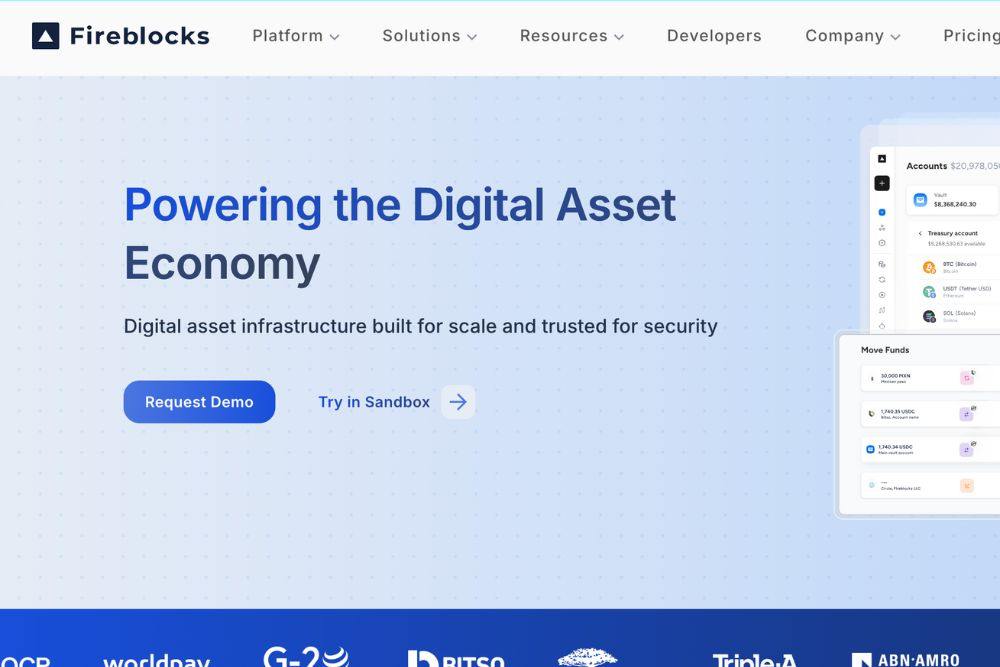
Fireblocks is widely trusted by banks, exchanges, and major crypto companies for secure asset management. It provides an all-in-one platform with wallet infrastructure, token transfers, and treasury automation.
Fireblocks supports over 1,500 tokens and integrates with DeFi, staking, and trading platforms.
Its multi-layer security includes MPC (multi-party computation) and insured custody.
The platform is built for scale and offers advanced roles, approvals, and compliance settings for teams.
| Pros | Cons |
| Top-tier security with MPC technology | Pricing can be high for smaller clients |
| Supports a wide range of tokens and platforms | May be more complex than needed for beginners |
| Trusted by major institutions | Requires onboarding and setup time |
| Advanced automation and compliance tools | |
| Strong integration with DeFi and exchanges |
4. Coinbase Prime
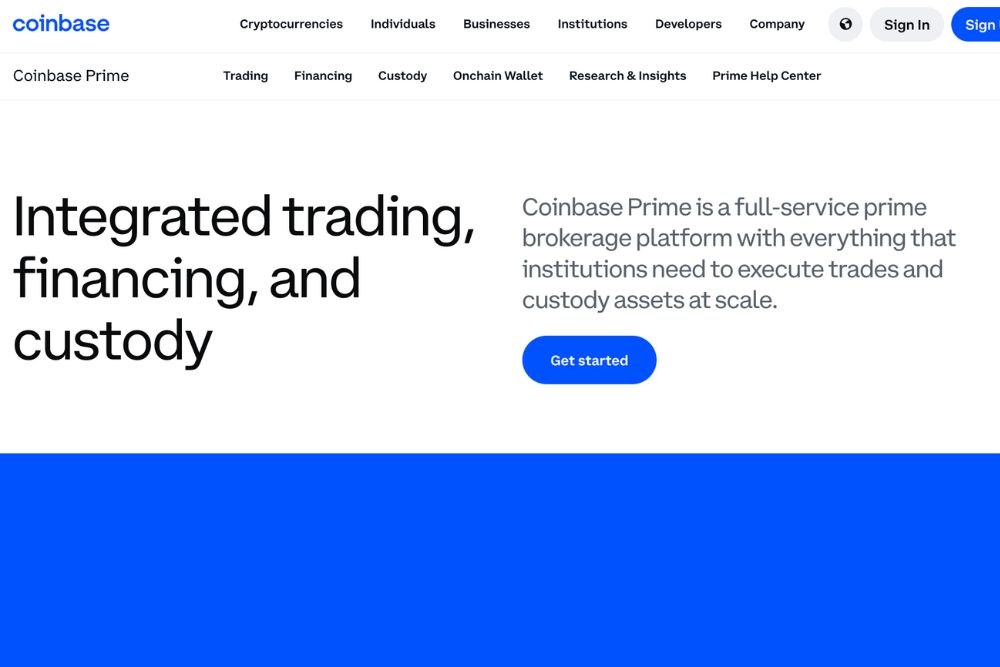
Coinbase Prime offers a complete platform for crypto trading, custody, and treasury operations.
It provides access to deep liquidity, cold storage, and institutional-grade reporting tools. As part of Coinbase, it benefits from strong regulatory compliance and reputation.
The platform offers portfolio monitoring, trade execution, and secure asset storage in one place.
It’s a popular choice for institutions entering crypto with a need for reliability and scale.
| Pros | Cons |
| Integrated with one of the most trusted exchanges | Not suitable for highly customized treasury setups |
| Cold storage and trading in one platform | Some services limited to U.S. or approved regions |
| Strong compliance and regulatory backing | Fees can be higher for advanced features |
| Detailed institutional reporting tools | |
| Good support for fiat-to-crypto conversion |
5. BitGo

BitGo has been a trusted name in crypto custody and treasury services since 2013. It offers multi-signature wallets, institutional custody, and strong compliance features. BitGo supports a wide range of assets and allows businesses to set custom policies for fund movement.
Their platform is built with a focus on security, regulation, and insurance-backed protection.
It’s often chosen by funds, exchanges, and large enterprises that need dependable infrastructure.
| Pros | Cons |
| Long-standing reputation and trust | Interface can be complex for new users |
| Multi-signature security for wallet access | May be overbuilt for smaller businesses |
| Insurance coverage for digital assets | Premium features come at a cost |
| Strong compliance and audit tools | |
| Supports many digital currencies |
6. Safe (formerly Gnosis Safe)

Safe is one of the most widely used smart contract wallets for Ethereum-based assets. It’s especially popular with DAOs, Web3 teams, and crypto startups due to its shared access model. The platform allows multiple signers, custom roles, and rules for managing treasury activity.
Safe is open-source, highly secure, and integrates with many DeFi tools. It’s a solid option for companies managing ERC-20 tokens and NFTs in a decentralized environment.
| Pros | Cons |
| Decentralized and open-source | Limited support for non-EVM chains |
| Supports multi-signature and role-based access | May require technical knowledge to set up |
| Widely integrated across Web3 platforms | No insurance coverage like traditional custodians |
| Popular choice for DAOs and DeFi projects | |
| No centralized custody risk |
7. Qredo

Qredo is a decentralized custody network that provides institutional-grade control over digital assets. Its platform allows teams to approve transactions together, reducing internal risk and improving oversight. Qredo combines secure messaging, policy controls, and governance into one system for managing crypto assets.
The network is designed for cross-chain activity and supports complex workflows like payments and settlements. It’s well-suited for organizations that want decentralized access without giving up compliance or control.
| Pros | Cons |
| Decentralized multi-party approvals | Still growing network compared to older platforms |
| Cross-chain support and integrations | Interface may take time to learn |
| Built-in governance and access policies | Limited brand recognition outside crypto circles |
| Strong focus on internal risk reduction | |
| Suited for collaborative teams and institutions |
8. Zodia Custody
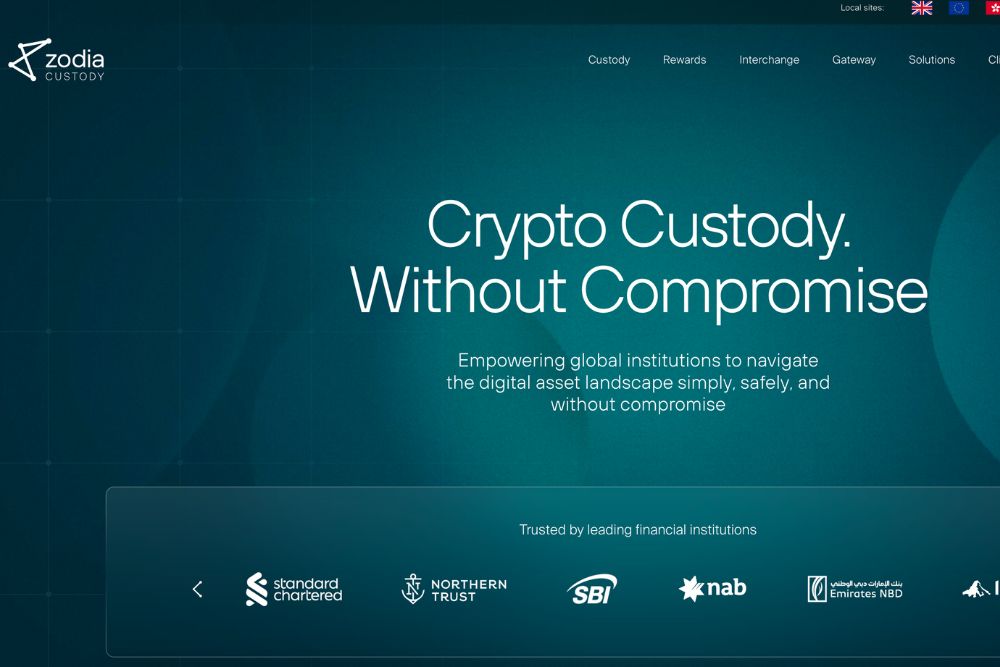
Zodia Custody is a regulated digital asset custodian backed by Standard Chartered and Northern Trust. It brings traditional finance standards to crypto, making it attractive for banks, funds, and corporates. The platform focuses on safety, compliance, and transparency, aligning with global regulatory frameworks.
Zodia offers institutional-grade controls and infrastructure for storing and moving digital assets. It’s a reliable choice for firms seeking regulation-ready crypto custody and treasury support.
| Pros | Cons |
| Backed by major financial institutions | Limited DeFi or Web3 integrations |
| Regulation-focused service model | May be too conservative for some crypto-native firms |
| High level of security and transparency | Primarily suited for large institutions |
| Good fit for traditional finance clients | |
| Trusted by banks and asset managers |
9. Copper

Copper is a digital asset custody and trading platform designed for institutions that need fast and secure access to crypto. Its ClearLoop technology allows off-exchange settlement, which improves capital efficiency and reduces counterparty risk.
Copper supports over 500 digital assets and offers customizable treasury controls and audit-ready reporting. The platform features strong encryption, multi-user permissions, and high-speed transaction processing. It’s ideal for funds and enterprises that need flexible access to exchanges without compromising custody security.
| Pros | Cons |
| ClearLoop allows fast, secure off-exchange settlement | Requires technical setup and onboarding |
| Supports 500+ digital assets | Best suited for active trading institutions |
| Custom treasury workflows and controls | Pricing may not fit small businesses |
| Efficient for high-volume trading operations | |
| Strong multi-layered security features |
10. Ledger Enterprise

Ledger Enterprise builds on Ledger’s hardware wallet reputation to offer secure crypto management for businesses. The platform includes role-based access controls, transaction policies, and centralized oversight of digital assets.
It allows businesses to manage internal treasury operations without exposing private keys online. Ledger Enterprise integrates with accounting tools and provides secure backup and recovery features. It’s best for companies that want to keep custody in-house with strong hardware-based protection.
| Pros | Cons |
| Hardware-based private key protection | Limited support for advanced automation |
| Strong internal controls and policy rules | Not suited for active trading environments |
| Good for companies wanting in-house custody | Requires hardware setup and device management |
| Secure backup and recovery options | |
| Integration with accounting systems |
These ten firms represent the best options for crypto treasury management in 2025. Whether you’re a startup, a fund, or an established company holding digital assets, choosing the right partner can help reduce risk, stay compliant, and keep your crypto operations running smoothly.
Key Features to Look For
Choosing the right crypto treasury management partner is a key decision that can impact your company’s security, compliance, and financial operations. Whether you’re a startup handling your first digital assets or an enterprise managing millions in crypto, certain features are non-negotiable. The right platform should give you control, flexibility, and protection without adding complexity.
Here are the core features to look for:
- Multi-user Access: Treasury systems should support multiple users with customizable roles and permissions. This ensures only authorized team members can approve or move funds, reducing the risk of mistakes or internal misuse.
- Audit Trails: Every transaction and action should be recorded and time-stamped. This creates transparency, helps with internal reviews, and simplifies audits and regulatory checks.
- Cold and Hot Wallet Management: A balance between hot wallets (for quick access) and cold wallets (for long-term secure storage) is essential. The platform should let you manage both with ease.
- Automated Workflows: Look for automation in recurring tasks like payments, reporting, and balance checks. This reduces manual effort, improves accuracy, and saves time as your treasury grows.
- Compliance Tools: Built-in support for tax reporting, KYC (Know Your Customer), and AML (Anti-Money Laundering) is critical. These tools help your business stay on the right side of evolving regulations.
- Integration with Banks and Exchanges: Your treasury system should connect smoothly with crypto exchanges, OTC desks, and even traditional banks. This makes liquidity management faster and reduces operational delays.
The best firms don’t just check these boxes—they also deliver strong customer support, reliable uptime, and ongoing platform updates to handle new risks as they emerge. As crypto matures, the complexity of treasury management increases, and having these features in place is essential for running secure, compliant, and efficient operations.
The Rise of Stablecoins in Treasury
One big trend in 2026 is the growing use of stablecoins like USDC and USDT in treasury operations. They bring the speed of crypto without the price swings of Bitcoin or Ethereum.
Stablecoins are now used for payroll, vendor payments, and cross-border transfers. Firms like Circle and Coinbase are leading this space, giving businesses tools to hold and use stablecoins safely.
This change makes crypto more useful for day-to-day operations, not just investment. Treasury firms are updating their services to reflect this shift.
Also Read: What Is Crank Nicolson Method? A Beginner’s Guide to Numerical Solutions
Choosing the Right Partner for Your Needs
Not every crypto treasury platform is built for every kind of business. Your ideal partner will depend on your company’s size, goals, risk profile, and how deeply crypto is integrated into your operations. Choosing the wrong platform can lead to unnecessary costs, limited features, or security gaps so it’s worth taking the time to match the solution to your actual needs.
Here are a few factors to consider when evaluating a crypto treasury management partner:
- Your asset types: Some platforms specialize in Bitcoin and Ethereum, while others are better for stablecoins, altcoins, or on-chain assets like NFTs and tokens. Make sure the platform supports everything you manage.
- Your monthly transaction volume: If you move funds often whether for payroll, trading, or operations you’ll need faster processing, automation features, and potentially lower fees. Low-volume users may prioritize simplicity and low overhead instead.
- Your team size and experience: Platforms with role-based access and approval workflows are especially useful for teams. If you’re a small or new team, look for providers with strong support and easy onboarding.
- Your country’s legal environment: Local regulations vary widely. Ensure your chosen firm offers compliance features that align with your country’s tax laws, reporting rules, and licensing requirements.
- Growth potential: Choose a provider that can scale with your needs. A solution that works now may not be enough in a year if your business grows or enters new markets.
Most top-tier providers offer demos, consultations, or even limited-time free trials. Use these opportunities to test the interface, understand the workflow, and ask questions. A little hands-on experience can reveal a lot about how well a platform fits your day-to-day operations.
Taking time to assess these areas up front will help you avoid switching costs later. The right partner isn’t just a service provider they become part of your core financial infrastructure.
Conclusion
Crypto is now part of how many companies work. From startups to global firms, treasury management is a growing need. Without the right system, it’s easy to make costly mistakes.
The top 10 crypto treasury management firms in 2026 are helping change that. They offer the tools companies need to hold, move, and report on digital assets in a smart way. Whether you need simple custody or full-featured automation, there’s a firm that fits.

Joshua Soriano
As an author, I bring clarity to the complex intersections of technology and finance. My focus is on unraveling the complexities of using data science and machine learning in the cryptocurrency market, aiming to make the principles of quantitative trading understandable for everyone. Through my writing, I invite readers to explore how cutting-edge technology can be applied to make informed decisions in the fast-paced world of crypto trading, simplifying advanced concepts into engaging and accessible narratives.