

A calendar spread is an options strategy where you sell a near-term option and buy a longer-term option at the same strike and of the same type, aiming to profit from time decay and rising volatility. Because the shorter-dated option loses value faster than the longer-dated one, the trade makes money when the underlying stays near the strike. You pay a net debit to open it, and that debit is your maximum risk.
In short, the calendar spread, also called a time spread or horizontal spread, is a neutral strategy that profits from the passage of time rather than from price direction. It works best when a stock trades in a range and when implied volatility is low but expected to rise. This guide explains how the strategy is built, how to calculate its key numbers, when it works, and the management details that trip up new traders.
This article is for educational purposes only and is not investment advice. Options are advanced instruments that carry significant risk, including the loss of your full investment. Consult a licensed financial advisor before trading.
What Is a Calendar Spread in Options?
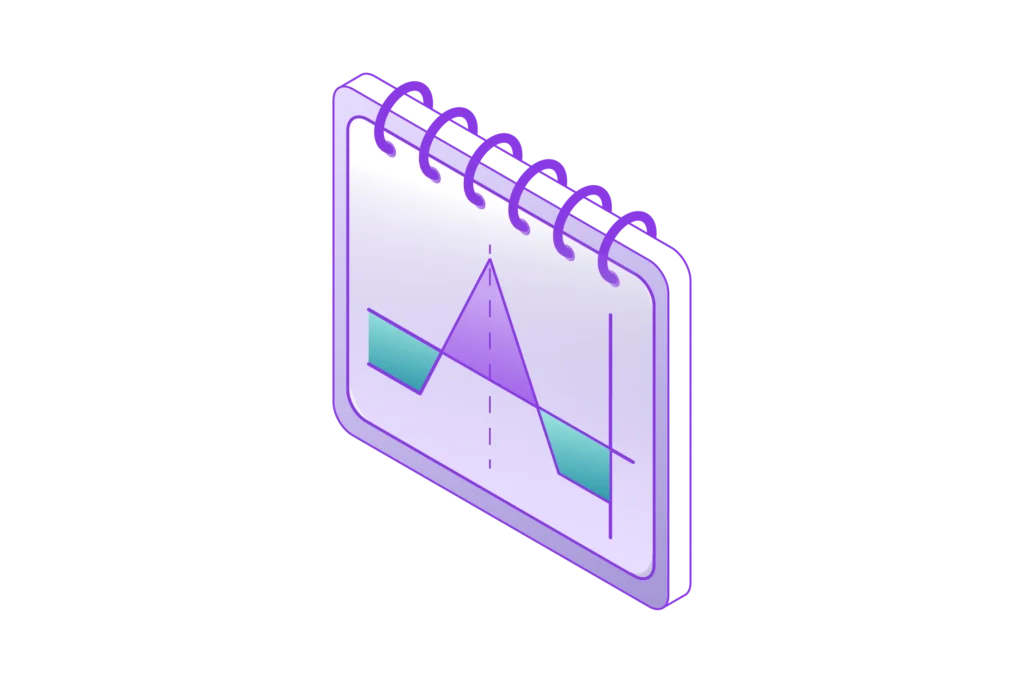
A calendar spread is a two-legged options strategy that buys and sells options of the same type and strike price but with different expiration dates.
It gets its “horizontal” nickname from the options chain, where the two legs sit on the same strike row but in different expiration columns. That contrasts with a vertical spread, which uses the same expiration but different strikes.
The standard version is the long calendar spread, built for a net debit. You sell the front-month (shorter-dated) option to collect premium and buy the back-month (longer-dated) option of the same type and strike. Both legs can be calls or puts. The payoff looks nearly identical either way, because what drives the trade is time and volatility, not direction.
How Does a Calendar Spread Work?

A calendar spread works by exploiting the fact that time decay accelerates as an option nears expiration. The front-month option you sold decays faster than the back-month option you bought, and that difference is your edge.
The two legs
- Short leg: the near-term option you sell. It has a high rate of time decay, so its value erodes quickly, which benefits you as the seller.
- Long leg: the longer-term option you buy. It decays more slowly and holds its time value, so you keep an asset with value even as the short leg fades.
Two forces drive the position. The first is theta, or time decay, which works in your favor because the short option loses value faster. The second is vega, or sensitivity to implied volatility. A long calendar spread is net long vega, meaning it gains value if implied volatility rises, since the longer-dated leg is more sensitive to volatility than the shorter one.
The key point is that a calendar spread is a bet on stillness and rising volatility, not on which way the stock moves. This vega exposure is what sets it apart from many other neutral strategies, some of which lose money when volatility climbs.
Also Read: Quant Trading vs Traditional Trading: Risk Controls, Execution Speed, and Market Impact
Calendar Spread Example

Suppose stock XYZ trades at $100 and you expect it to stay near that level over the next month. You open a long call calendar spread:
- Sell 1 near-term (about 30 days) $100 call for $2.00
- Buy 1 longer-term (about 60 days) $100 call for $3.50
- Net debit paid: $1.50, or $150 per spread (one contract controls 100 shares)
If XYZ sits near $100 as the near-term call expires, that short call expires worthless and you keep its premium, while your longer-dated call still holds meaningful time value. You can then sell the long call to close for a profit, or keep it.
The table below shows estimated outcomes at the front-month expiration. These are estimates, because the back-month call’s value depends on implied volatility at that moment.
| XYZ at Front-Month Expiration | What Happens | Estimated Profit / Loss |
| $85 | Far below the strike | About -$150, near max loss |
| $95 | Below the strike | Small loss |
| ~$97 | Approximate lower breakeven | About $0 |
| $100 | At the strike | About +$100, max profit |
| ~$103 | Approximate upper breakeven | About $0 |
| $105 | Above the strike | Small loss |
| $115 | Far above the strike | About -$150, near max loss |
The takeaway is that the profit zone is centered on the strike and the loss on either side is capped at the debit paid.
How Do You Calculate Max Profit, Max Loss, and Breakevens?
Unlike a vertical spread, a calendar spread does not have neat, fixed formulas, because the long leg’s value at the short expiration is unknown in advance.
| Metric | How It Works |
| Maximum loss | The net debit paid to open the spread. In the example, that is $150. |
| Maximum profit | Realized if the stock sits exactly at the strike when the short option expires. There is no fixed formula, since it depends on the long leg’s remaining time value and implied volatility. |
| Breakevens | Two points, one above and one below the strike, where the long option’s value equals the original debit. They cannot be known exactly in advance because they depend on volatility. |
Maximum loss occurs if the stock moves sharply away from the strike in either direction, driving both options toward parity or worthlessness. Maximum profit occurs at the strike, where the short option expires worthless and the long option keeps the most time value.
Because the long leg’s future value hinges on implied volatility, a broker profit-and-loss calculator is the practical way to estimate outcomes before entering. A common target is the “risk one to make two” idea: hoping to close for roughly double the debit paid.
When Should You Use a Calendar Spread?
A calendar spread works best when you expect a stock to stay near a chosen price in the near term and you expect implied volatility to rise.
Ideal conditions include:
- Range-bound markets with no strong near-term trend.
- Low implied volatility that you expect to increase, since the long leg benefits most from rising volatility.
- Known events such as an earnings date or economic report that you think the near-term option is overpricing, letting you sell that inflated premium.
- A longer-term directional lean paired with near-term calm, using a slightly out-of-the-money strike to add a bullish or bearish tilt.
The takeaway is that the calendar spread rewards patience and a view on volatility. If you expect a large immediate move, a different strategy will usually serve better.
Are Call and Put Calendar Spreads Different?
In practice, call and put calendar spreads behave almost identically, because the payoff is driven by time and volatility rather than direction.
Since both legs share the same strike, neither captures intrinsic value, so the choice often comes down to liquidity. Traders frequently use out-of-the-money options because those strikes tend to have tighter bid-ask spreads. You can also tilt the trade: placing both legs slightly out of the money with calls leans bullish, while doing so with puts leans bearish.
The key point is to pick the option type with better liquidity and the strike that matches your directional bias, if you have one.
Long vs Short Calendar Spreads
The version described so far is the long calendar spread. There is also a short calendar spread, which reverses the legs.
| Feature | Long Calendar Spread | Short Calendar Spread |
| Structure | Sell near-term, buy longer-term | Buy near-term, sell longer-term |
| Cost | Net debit | Net credit |
| Wants | Stock to stay near the strike | A large, fast move |
| Volatility | Benefits from rising IV | Benefits from falling IV |
| Risk and margin | Risk limited to the debit | Higher risk, more margin |
Most retail traders use the long calendar. The short calendar is less common because selling the longer-dated option adds naked short risk and requires more margin.
What Are the Pros and Cons of a Calendar Spread?
Like any strategy, the calendar spread involves clear trade-offs.
Pros
- Defined, limited risk equal to the debit paid
- Lower cost than buying the longer-dated option outright
- Profits from time decay and from rising implied volatility
- Flexible, with the option to tilt bullish or bearish
Cons
- Profit is not fixed and depends on volatility at short expiration
- Losses if the stock moves too far in either direction
- Falling implied volatility hurts the position
- Assignment risk on the short leg, plus added complexity from two expirations
The bottom line: the calendar spread offers a cheap, defined-risk way to trade time and volatility, but it demands more knowledge than a simple single-leg trade.
How Do You Manage a Calendar Spread?
Management matters because the position changes character once the short leg expires.
Common tactics include:
- Closing at the short expiration. The classic exit is to buy back the cheap front-month option and sell the back-month option to close, capturing the decay difference.
- Rolling the short leg. Instead of closing, you can sell a new near-term option each time the previous one expires, repeatedly collecting premium while holding the long leg.
- Watching for early assignment. The short option can be assigned early if it goes in the money, especially around dividends, so monitor it near expiration.
- Managing the leftover long option. If you let the short leg expire, you are left holding a single long option, which changes your exposure and can raise margin requirements.
The key point is to decide in advance whether you intend to close at short expiration or roll the position, so the trade does not drift into unintended naked exposure.
Also Read: Option Greeks Formula: From Black-Scholes Derivations to Practical Use
Common Mistakes to Avoid
A few errors show up often with calendar spreads:
- Entering when volatility is high. Since the trade benefits from rising volatility, opening it when implied volatility is already elevated leaves little room for gain and risk of a volatility drop.
- Ignoring the event calendar. Placing a calendar across an earnings report can backfire if the expected move is large, so know what falls between your two expirations.
- Forgetting the naked long leg. Letting the short option expire without a plan leaves an open long position that behaves very differently.
- Overlooking liquidity. Wide bid-ask spreads on illiquid strikes eat into a small debit, so favor liquid options.
Avoiding these keeps the strategy doing what it is designed to do: profit slowly from time and volatility in a quiet market.
Key Takeaways
The calendar spread is a defined-risk options strategy that profits from time decay and rising implied volatility rather than from price direction. You sell a near-term option and buy a longer-term option at the same strike, paying a net debit that represents your maximum risk, and you profit most when the stock sits near that strike as the short leg expires.
Its strengths are low cost, limited risk, and a rare positive exposure to rising volatility, while its weaknesses are an unfixed profit, losses on large moves, and the complexity of managing two expirations. It works best in range-bound markets with low volatility expected to climb, and it is usually managed by closing at short expiration or rolling the short leg.
Used with clear entry and exit rules and an understanding of volatility and assignment risk, the calendar spread is a versatile tool for trading time. As with any options trade, learn the mechanics thoroughly and risk only what you can afford to lose.
Frequently Asked Questions
What is a calendar spread in simple terms?
It is an options trade where you sell a shorter-dated option and buy a longer-dated one at the same strike and type. You profit if the stock stays near the strike, because the option you sold loses value faster than the one you bought.
Is a calendar spread bullish or bearish?
By default it is neutral, since it profits when the stock stays near the strike. You can give it a bullish or bearish lean by choosing an out-of-the-money strike above or below the current price.
What is the maximum loss on a calendar spread?
The maximum loss is the net debit you paid to open the trade. It occurs if the stock moves sharply away from the strike in either direction by the short option’s expiration.
Does a calendar spread profit from volatility?
Yes. A long calendar spread is net long vega, so it gains value when implied volatility rises and loses value when volatility falls. This is why it is often opened when volatility is low but expected to increase.
What is the difference between a calendar spread and a vertical spread?
A calendar spread uses the same strike but different expirations, profiting from time and volatility. A vertical spread uses the same expiration but different strikes, profiting from direction. A diagonal spread combines both, using different strikes and expirations.
Is a calendar spread good for beginners?
It is generally considered an intermediate to advanced strategy because it involves two expirations, volatility exposure, and assignment risk. Beginners should understand single options and time decay first and practice with small sizes or paper trading.

Joshua Soriano
As an author, I bring clarity to the complex intersections of technology and finance. My focus is on unraveling the complexities of using data science and machine learning in the cryptocurrency market, aiming to make the principles of quantitative trading understandable for everyone. Through my writing, I invite readers to explore how cutting-edge technology can be applied to make informed decisions in the fast-paced world of crypto trading, simplifying advanced concepts into engaging and accessible narratives.