
The core difference between ICOs and IPOs is what you receive for your money: an ICO gives you digital tokens, while an IPO gives you equity shares that represent ownership in a company. An Initial Coin Offering (ICO) is how blockchain projects raise funds by selling tokens, and an Initial Public Offering (IPO) is how established companies raise funds by selling stock on a regulated exchange. From there, they differ on regulation, cost, access, and risk.
In short, an IPO is the traditional, heavily regulated route to public capital, while an ICO is the faster, lighter-touch crypto alternative that trades investor protections for speed and openness. Both raise money from the public, but they suit very different companies and carry very different risks. This guide breaks down exactly how ICOs and IPOs compare, how each process works, and whether ICOs are making a genuine comeback in 2026.
This article is educational and not investment advice. Both ICOs and IPOs carry risk, and ICOs in particular are highly speculative and prone to fraud. Consult a licensed financial advisor before investing.
ICOs vs IPOs: Quick Comparison
Here is the difference at a glance before the detail.
| Feature | ICO | IPO |
| Full name | Initial Coin Offering | Initial Public Offering |
| What you get | Digital tokens, such as utility or governance tokens | Equity shares, meaning company ownership |
| Typical issuer | Early-stage blockchain projects | Established private companies |
| Regulation | Light and evolving, varies by country | Heavy, with mandatory disclosures |
| Cost and speed | Cheaper, faster, often weeks | Expensive, slow, months to years |
| Access | Global, permissionless, open to retail | Often gated through brokers |
| Risk level | Very high, fraud-prone | Moderate, with investor protections |
The rest of this guide explains why each of these differences matters.
What Is an IPO (Initial Public Offering)?

An IPO is the process by which a privately held company sells shares of its stock to the public for the first time on a regulated stock exchange.
When a company goes public, it works with investment banks that underwrite the offering, sets a share price, and submits to rigorous scrutiny from regulators such as the U.S. Securities and Exchange Commission (SEC). It must publish detailed financial disclosures so investors can assess its health before buying in. In return for buying shares, investors receive an equity stake, meaning they own a small piece of the company and may benefit from its growth and, sometimes, dividends.
The appeal of an IPO is access to significant capital and the credibility of public markets, backed by decades of established rules and accountability. The trade-off is that going public is expensive, slow, and demanding, and share prices still rise and fall with the market.
Also Read: Iron Butterfly Strategy: How It Works, Setup, and When to Use It
What Is an ICO (Initial Coin Offering)?

An ICO is a fundraising method where a project issues its own digital tokens to the public in exchange for money or established cryptocurrencies like Bitcoin or Ethereum.
Crucially, an ICO usually does not give investors an ownership stake in the company. Instead, buyers receive tokens that may grant access to a future product, governance rights, or staking within the project’s ecosystem, along with the hope that the token appreciates once it trades on exchanges. ICOs became popular during the 2017 crypto boom because they let blockchain startups bypass banks and venture capital to raise money quickly and globally.
The appeal is speed, low cost, and open access, since almost anyone can participate and projects keep full control of the process. The trade-off is far less regulation and oversight, which makes ICOs both agile and risky.
ICOs vs IPOs: What Are the Key Differences?
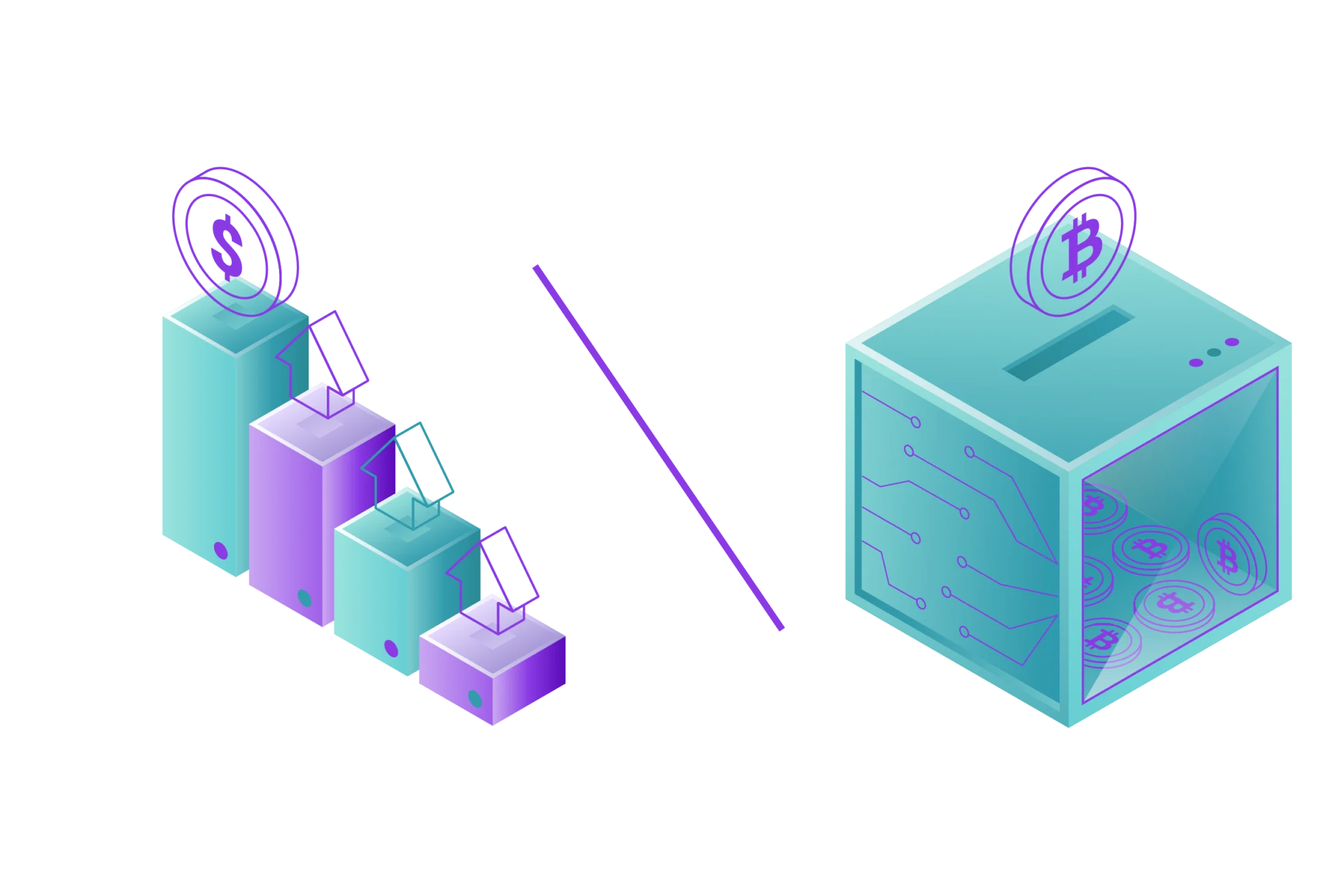
Beyond the headline distinction of tokens versus shares, several differences shape which route fits a company and how safe it is for investors.
- What you own. An IPO gives equity and a claim on the company. An ICO gives tokens, which are usually utility or governance instruments, not ownership.
- Regulation. IPOs are heavily regulated with mandatory disclosures. ICOs operate in a lighter, evolving, and often patchy legal environment.
- Cost and speed. An IPO can take months or years and cost millions in fees. An ICO can launch in weeks at a fraction of the cost.
- Who can invest. IPOs are often accessed through brokers and can favor institutions. ICOs are typically open to anyone with a crypto wallet, anywhere.
- Maturity of the issuer. IPOs suit established, revenue-generating companies. ICOs suit early-stage projects, sometimes with only a whitepaper.
- Liquidity and volatility. Tokens often trade immediately and are highly volatile. Shares trade on regulated exchanges with more stability.
The key point is that an IPO trades speed for safety and structure, while an ICO trades safety for speed and openness. Neither is universally better.
Also Read: What is HFT Trading? A Comprehensive Beginner’s Guide
How Does the Fundraising Process Differ?
The two processes reflect their different philosophies.
An IPO is a structured, multi-stage journey. The company hires underwriters, prepares audited financials, files a registration document with regulators, markets the offering to institutional investors in a roadshow, sets a price, and finally lists on an exchange. Each step involves legal and regulatory checkpoints designed to protect investors.
An ICO is far more streamlined. A project typically publishes a whitepaper describing its idea and token, sets a fundraising target and timeline, and sells tokens directly to the public, often accepting payment in Ethereum or Solana. There may be little or no independent vetting, which is why due diligence falls heavily on the investor.
The takeaway is that the IPO process builds in accountability at every stage, while the ICO process prioritizes moving fast, leaving verification largely to the buyer.
Regulation: The Biggest Difference Between ICOs and IPOs
Regulation is where ICOs and IPOs diverge most, and it is the single most important factor for investors to understand.
IPOs sit within a mature legal framework. Companies must register, disclose finances, and comply with securities laws enforced by bodies like the SEC, which creates transparency and recourse if something goes wrong. ICOs, by contrast, have historically operated in a legal grey area. Some are structured as securities and fall under existing rules, while many have not, and a few countries have banned them outright.
That picture is shifting in 2026. In the United States, a more crypto-friendly SEC has moved from enforcement-heavy tactics toward clearer rules, including revived proposals for a token “safe harbor” that would give projects a defined window to develop before full securities registration. In Europe, the MiCA framework is pushing token issuers toward stronger disclosure and anti-money-laundering standards. The direction is toward more structure, not less.
The bottom line is that IPOs offer strong investor protections today, while ICO regulation is still maturing, so caution remains essential. The SEC’s investor education resources are a good starting point for anyone weighing a token sale (Investor.gov).
How Do Risk and Investor Protection Compare?
The risk profiles are starkly different, and this is where many new investors get caught out.
IPOs are not risk-free, since markets fluctuate and companies can underperform, but they benefit from transparency, audited disclosures, and legal accountability. ICOs carry substantially higher risk. The lighter oversight that makes them fast also makes them a frequent target for fraud, and the volatility of crypto markets means token values can collapse as quickly as they rise.
For investors, the practical difference is recourse. If an IPO company misleads the market, there are legal consequences and regulators to appeal to. With many ICOs, that safety net is thin or absent, so the responsibility to verify a project falls almost entirely on the buyer.
The takeaway is that an ICO can offer higher potential upside, but it comes with meaningfully higher risk and far less protection than an IPO.
Are ICOs Still Relevant in 2026?
Yes, and after years in decline, ICOs and public token sales are making a quiet comeback, alongside several evolved formats.
The original ICO model faded after its 2017 peak due to scams and regulatory pressure, but a friendlier 2026 regulatory climate has renewed interest in fair, public token fundraising. At the same time, the concept has branched into more structured formats.
| Model | What It Is |
| ICO | A project sells tokens directly to the public |
| IEO | A token sale hosted and vetted by a crypto exchange |
| IDO | A token launch on a decentralized exchange |
| STO | A security token offering, regulated like a traditional security |
These variations aim to keep the speed and openness of ICOs while adding vetting, compliance, or investor protection. The takeaway is that the token-fundraising idea has not died, it has matured and diversified.
ICOs vs IPOs: Which Is Better?
There is no single winner, because the right choice depends on who you are and what you want.
For a company, an IPO suits an established business ready for the scrutiny and prestige of public markets, while an ICO or its variants suit an early-stage blockchain project that needs to raise money quickly and build a community. For an investor, an IPO offers regulated exposure to a maturer company with real protections, while an ICO offers early, high-risk access to a project that could succeed spectacularly or fail entirely.
The honest summary is that IPOs prioritize safety and structure, and ICOs prioritize speed and openness. Match the mechanism to your risk tolerance and goals rather than assuming one is always superior.
Key Takeaways
ICOs and IPOs both raise money from the public, but they are fundamentally different. An IPO sells equity shares in an established company through a heavily regulated process, offering ownership and strong investor protections. An ICO sells digital tokens for an early-stage project through a faster, lighter-touch process that trades protection for speed and open access.
The defining contrasts are what you own, tokens versus shares, and how you are protected, with IPOs offering mature regulation and ICOs still catching up. In 2026, the gap is narrowing as friendlier regulation and structured formats like IEOs, IDOs, and STOs bring more accountability to token fundraising.
Neither model is universally better. IPOs favor safety and structure, while ICOs favor speed and openness, so the right choice depends on the company’s maturity and the investor’s appetite for risk. Whichever you consider, do your own research and understand exactly what you are buying.
Also Read: How to Do Algo Trading? Step-by-Step Guide for Beginners
Frequently Asked Questions
What is the main difference between an ICO and an IPO?
The main difference is what investors receive. An IPO gives equity shares that represent ownership in a company, while an ICO gives digital tokens that usually provide utility or governance rather than ownership. IPOs are also heavily regulated, whereas ICOs are more lightly regulated.
Are ICOs riskier than IPOs?
Yes. ICOs are generally far riskier because they have lighter regulation, less transparency, and a higher incidence of fraud, and crypto tokens are highly volatile. IPOs carry market risk too, but they include disclosures and investor protections that ICOs often lack.
Do you own part of a company with an ICO?
Usually not. ICO tokens typically grant access to a product, governance rights, or staking within an ecosystem, but not an equity stake. This is a key difference from an IPO, where shares represent real ownership.
Are ICOs legal?
It depends on the jurisdiction. Many countries permit ICOs under evolving rules, some regulate them as securities, and a few have banned them. In 2026, frameworks like the SEC’s proposed safe harbor and Europe’s MiCA are bringing more structure to token fundraising.
What replaced ICOs?
ICOs did not disappear but branched into formats like IEOs, which are vetted by exchanges, IDOs, which launch on decentralized exchanges, and STOs, which are regulated security token offerings. Public ICO-style sales are also seeing renewed interest in 2026.
Which is better for raising money, an ICO or an IPO?
It depends on the company. An IPO suits established firms ready for regulation and public markets, while an ICO or its variants suit early-stage blockchain projects that need fast, global, community-driven funding. Each fits a different stage and type of business.

Joshua Soriano
As an author, I bring clarity to the complex intersections of technology and finance. My focus is on unraveling the complexities of using data science and machine learning in the cryptocurrency market, aiming to make the principles of quantitative trading understandable for everyone. Through my writing, I invite readers to explore how cutting-edge technology can be applied to make informed decisions in the fast-paced world of crypto trading, simplifying advanced concepts into engaging and accessible narratives.