
Liquidity providers keep crypto markets running by stepping in to absorb order flow when regular buyers and sellers aren’t matching up. Without their constant stream of limit orders, basic trades would suffer from massive price slippage and wild spread spikes. By putting real capital on the line across multiple exchanges, these market makers provide the depth needed for everything from small retail swaps to massive institutional block trades.
Finding a reliable partner, though, isn’t as simple as picking a big name. The market is full of market makers with completely different technology setups, fee structures, and execution speeds. To protect your margins, you have to look past the pitch deck and test real-world performance metrics like API latency, order book depth during high volatility, and legal compliance. This guide breaks down how crypto liquidity providers operate and gives you a realistic, step-by-step framework to evaluate them before signing a contract.
What is a Crypto Liquidity Provider?
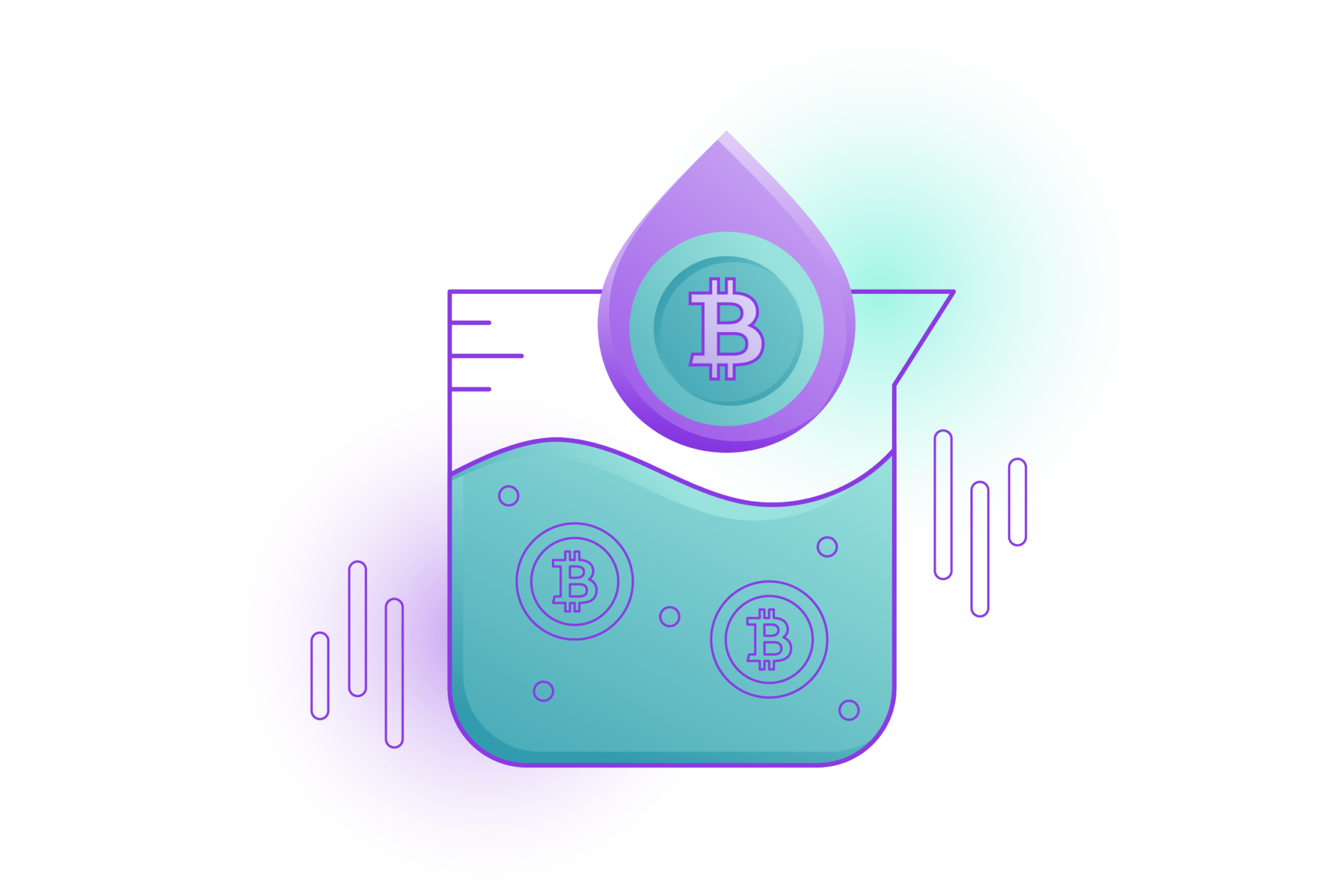
Crypto liquidity providers supply the ongoing order depth required for fast, stable trade execution. Whether structured as a specialized institution or a quantitative trading firm, their core function remains the same: posting active bid and ask quotes across different market conditions.
In illiquid or quiet markets, these entities absorb trade flow when organic buyers and sellers are missing. This intervention maintains market continuity, prevents wild spread widening, and ensures traders can enter or exit positions without triggering severe price shocks.
There are two main types of liquidity providers: Market Makers and Market Takers. Market Makers are usually large institutions or entities that add liquidity to the market. They place limit orders that create trading opportunities for others. In contrast, Market Takers are those who utilize the liquidity offered by Market Makers. They fill the existing orders, thus ‘taking’ the market’s liquidity.
Liquidity providers keep crypto prices stable by filling order books with plenty of buy and sell quotes. This constant volume acts as a buffer against trade slippage, making sure your orders actually execute at the price you saw on screen instead of jumping around mid-trade.
Also Read: What Is Liquidity Provider in Crypto?
Role of the Liquidity Providers
Crypto liquidity providers serve several mission-critical functions that keep exchange venues efficient, competitive, and secure:
- Mitigating Price Slippage: By maintaining high volumes of order quotes around current market prices, LPs ensure that trades are executed close to their intended prices without drastically moving the market.
- Tightening Spreads: When market makers constantly quote buy and sell prices, they shrink the gap between the highest offer and the lowest ask. That directly lowers transaction costs every time a trader places an order.
- Setting Real Market Value: LPs track trading volume and order flow across multiple platforms in real time. Using that continuous data feed, they adjust their quotes so traders get fair, accurate asset prices wherever they execute.
- Handling Volume Spikes: When market sentiment turns suddenly, LPs step in to fill large buy or sell orders. That extra capital cushions the blow, preventing panic moves from turning into extreme price spikes or crashes.
- Connecting Multi-Market Prices: LPs trade simultaneously across centralized exchanges, decentralized pools, and private OTC desks. This constant cross-platform trading wipes out local price gaps, making sure rates stay uniform everywhere.
How to Choose a Crypto Liquidity Provider
Finding the right crypto liquidity provider requires a structured evaluation of technical execution, security, and cost structures to ensure your trading operations run reliably.
Step 1: Define Your Specific Trading & Technical Needs
Before reaching out to vendors, map out your precise operational requirements. Identify the primary token pairs you need to support, your target order sizes, acceptable spread limits, and how your system will talk to theirs. Institutional desks typically rely on FIX protocol for high-throughput order execution, while newer platforms often connect via REST and WebSocket APIs for streaming data. Having clear technical parameters up front saves weeks of wasted discussions with ill-fitted providers.
Step 2: Evaluate Technical Metrics & Order Book Depth
Dig directly into the provider’s execution infrastructure and market depth. Request historical data to analyze order book thickness across different price levels—deep order books ensure large trades execute cleanly without jumping prices. Test their connection latency to confirm fill speeds, review their platform uptime history, and verify that their offered spreads stay tight instead of blowing out when market volatility spikes.
Step 3: Verify Regulation, Compliance & Security
Never compromise on legal and asset security standards. Audit the provider’s licensing, operating jurisdiction, and compliance frameworks, including their Anti-Money Laundering (AML) and Know Your Customer (KYC) procedures. On the technical side, inspect their asset safeguarding practices: demand hardware security modules (HSMs), multi-signature cold storage for reserves, strictly managed API keys, and robust multi-factor authentication systems.
Step 4: Assess Pricing Models & Fee Structures
Look at the full cost of doing business with each provider, not just their headline maker/taker rates. Calculate how spread markups, overnight financing fees, funding rates, and withdrawal charges affect your total cost per trade. Watch out for hidden line items like minimum monthly volume penalties or steep technical integration fees that can quietly eat into your profit margins over time.
Step 5: Check Reputation & Run a Technical Trial
Cross-reference client reviews and industry reputation with hands-on testing. Research how the firm has performed during past market crashes or extreme volume spikes. Finally, set up a sandbox connection or run a low-volume trial in production to benchmark live execution speeds, check API reliability, and evaluate how quickly their support team responds when issues pop up. Only commit full capital once real-world performance matches their claims.
Evaluating the Reputation and Track Record of a Liquidity Provider

Assessing the reputation and track record of a liquidity provider is an essential part of your selection process. It involves various elements:
- User Feedback: Reviews from active clients reveal what a provider is actually like to work with. Positive praise is helpful, but repeated complaints about slow support or unexpected fees tell the true story.
- Industry Reputation: Assess the firm’s overall standing across the digital asset space. Legitimate providers typically leave a clear trail of media coverage, trade memberships, and backing from recognized institutional figures.
- Proven History: Take time to check if the firm has a clean past. Seeing how they handled previous market crashes or whether they ran into legal trouble tells you if they are actually reliable.
- No Hidden Fees: Good providers don’t hide what they charge you. If a firm isn’t willing to give you a straightforward breakdown of their fees and risks right from the start, walk away.
- Support Responsiveness: Customer support standards reflect a company’s overall operational discipline. Providers that offer fast, competent support are far better equipped to assist during market emergencies.
Also Read: Crypto Liquidity: An Overview and Importance
Factors To Consider When Choosing a Crypto Liquidity Provider

Choosing a crypto liquidity provider can have significant implications on your trading outcomes. Therefore, several factors warrant your consideration before making this vital decision.
1. Spreads
The spread refers to the price difference between the buy (bid) and sell (ask) orders provided by a liquidity provider. Narrow spreads imply lower trading costs, making it a desirable feature in a liquidity provider. It’s crucial to compare the spreads of various providers to find the most cost-effective solution.
2. Depth of the Order Book
The depth of the order book illustrates the market’s liquidity at different price levels. It represents the volume of buy and sell orders available for execution. A deep order book indicates that there’s sufficient liquidity to execute larger trades without causing drastic price movements. When evaluating a liquidity provider, consider the depth and width of their order books.
3. Latency
The crypto market offers an ultra-speed environment where the gap of a tiny millisecond can shift the price significantly. To survive in this environment, the liquidity providers need the system that has low latency. Lower latency ensures faster trade execution, mitigating the risk of price slippage.
4. Regulation and Compliance
Given the regulatory scrutiny cryptocurrencies often face, it is essential that your chosen liquidity provider complies with the necessary financial regulations. A regulated provider is typically more trustworthy and offers better protection for your assets.
5. Security
The security factor is a must-feature to look at when you are selecting the right crypto liquidity providers. The security standards that are often implemented in the financial markets, such as two-factor authentication (2FA), encryption, and cold storage of funds. A reliable provider will prioritize the safety of their clients’ assets.
6. Reliability and Uptime
Good reliability is often linked with continuous uptime. Uptime is a condition where the system operates continuously without having any obstacles or delay.
Liquidity providers with frequent outages or delays can disrupt your trading strategy and lead to potential losses. Therefore, opt for providers with a proven record of platform stability and high uptime.
Also Read: Top 10 Crypto Liquidity Providers Powering Markets in This Year
Examples of Best Liquidity Providers
Below is a comparison of top crypto liquidity providers and quantitative market makers in the market today:
Provider Name | Primary Focus & Specialization | Key Features & Strengths | Target Audience |
Quantitative market making & multi-asset liquidity | Proprietary high-frequency trading infrastructure, cross-venue quoting (CEX/DEX), custom liquidity solutions, and automated treasury services. | Institutional platforms, crypto exchanges, and high-volume institutional traders | |
Wintermute | High-frequency algorithmic trading & market making | Massive liquidity provisioning across hundreds of tokens, OTC trading desk, and deep DeFi integration | Exchanges, Web3 projects, token issuers, and institutional investors |
Jump Crypto | Infrastructure engineering, liquidity provisioning, & quantitative research | Ultra-low latency execution infrastructure, high-frequency market making, deep liquidity for spot and derivatives | Tier-1 exchanges, DeFi protocols, and institutional traders |
Cumberland (DRW) | Institutional OTC liquidity & quantitative market making | Decades of traditional market-making heritage, substantial capital capacity for massive block trades, robust compliance | Ultra-high-net-worth individuals, crypto funds, and institutional desks |
GSR | Algorithmic trading, market making, & risk management | Customized liquidity programs, program execution, structured products, and deep market expertise | Token issuers, exchanges, mining firms, and crypto funds |
Conclusion
Choosing a liquidity provider shouldn’t be based on surface-level metrics alone. Core execution speed, spread tightness, and compliance frameworks are what safeguard your capital when market volatility spikes. Taking the time to audit a firm’s system uptime and operational history helps you separate genuinely reliable market makers from those that fall short under pressure.
Once you verify both their performance data and client reputation, you can build a partnership tailored to your trading needs. In digital asset markets, maintaining high standards for your operational partners is an ongoing process. Making well-researched, data-backed decisions remains the most effective way to optimize your trade outcomes and manage risk.
Frequently Asked Questions
What is the main difference between a Market Maker and a Market Taker?
Market Makers add liquidity by placing limit orders in the order book, while Market Takers remove liquidity by filling those existing orders instantly.
Why is low latency critical when choosing a liquidity provider?
Low latency ensures millisecond-level execution speeds, preventing price slippage during periods of high crypto market volatility.
How do crypto liquidity providers mitigate slippage?
They maintain deep, dense order books that absorb large transaction volumes without significantly shifting the asset’s execution price.
How do crypto liquidity providers generate revenue?
LPs earn profits primarily through bid-ask spreads, trading transaction fees, and commissions on over-the-counter (OTC) block trades.
What is the difference between centralized (CEX) and decentralized (DEX) liquidity providers?
CEX providers use order books and algorithmic high-frequency trading, while DEX providers deposit crypto pairs into smart-contract liquidity pools controlled by Automated Market Makers (AMMs).
What are LP tokens, and how do they work?
LP tokens are automated digital receipts given to users who deposit assets into DeFi liquidity pools, representing their proportional share of the pool and accumulated trading fees.
How do LPs handle large institutional block trades without disrupting market prices?
LPs route block trades through private Over-The-Counter (OTC) desks or dark pools, fulfilling orders directly from internal balance sheets off public order books.

I'm Carina, a passionate crypto trader, analyst, and enthusiast. With years of experience in the thrilling world of cryptocurrency, I have dedicated my time to understanding the complexities and trends of this ever-evolving industry.
Through my expertise, I strive to empower individuals with the knowledge and tools they need to navigate the exciting realm of digital assets. Whether you're a seasoned investor or a curious beginner, I'm here to share valuable insights, practical tips, and comprehensive analyses to help you make informed decisions in the crypto space.