
Big banks and global supply chains are slowly ditching their outdated software to switch over to shared digital ledgers. However, with crypto prices constantly dominating the news, most people still struggle to understand what is blockchain and why it matters beyond market speculation. For anyone evaluating long-term economic value, trying to understand this topic clearly is essential to separating real-world utility from short-lived market enthusiasm.
From a structural standpoint, the technology operates as an immutable, distributed ledger of events and transactions. Rather than relying on a centralized registrar to validate and store data, the system utilizes cryptographic proofs validated by a network of independent peers, offering a high degree of evidentiary certainty. To navigate this regulatory landscape, this article details the system’s core features, architectural framework, operational divergence from traditional finance, current real-world applications, and the future of the technology.
What is Blockchain?

Blockchain is a system that relies on a chronological sequence of data blocks, each containing a verified list of transactions. When a block is full, it becomes permanently bound to the block before it. This registry is kept by a decentralized network of independent computers, not a central regulatory body. For a new transaction to be added to the official record, it must first be broadcast to the network and independently verified by these computers, removing the need for a traditional, centralized system.
From a compliance standpoint, this mechanism guarantees that data cannot be altered discreetly. Every block is verified with a distinct digital signature known as a hash. If anyone attempts to rewrite historical records, the fingerprint instantly changes. This makes the tampering undeniably evident, providing an exceptionally secure and unforgeable audit trail for legal and financial oversight.
Also Read: Blockchain Structure: Essential Guide Step by Step
Core Features of Blockchain Systems
To understand why this framework is fundamentally reshaping enterprise strategy, it is essential to analyze the primary attributes that elevate it above conventional corporate data systems.
- Decentralization: Standard databases are managed by a central organization, such as a bank or a corporate headquarters. In contrast, this technology distributes a copy of the ledger across a global network of computers. Because the data is shared so widely, no single company or administrator can monopolize or dictate the network’s operations.
- Immutability: Once a transaction is verified and recorded on a block, it is locked in forever. The cryptographic linking of blocks makes it practically impossible to change, forge, or delete past records without alerting the entire network.
- Enhanced Security: Blockchain systems rely on advanced cryptography. Every piece of data is encrypted, and the decentralized nature means there is no single point of failure for hackers to target.
- Transparency: For public blockchains, the entire history of transactions is visible to anyone on the network. While the identities of the people making the transactions are hidden behind alphanumeric addresses, the flow of assets is completely traceable.
- Consensus-Driven: Because there is no central authority, the network uses mathematical algorithms (known as consensus mechanisms) to agree on which transactions are valid before they are permanently added to the chain.
How Does It Work?
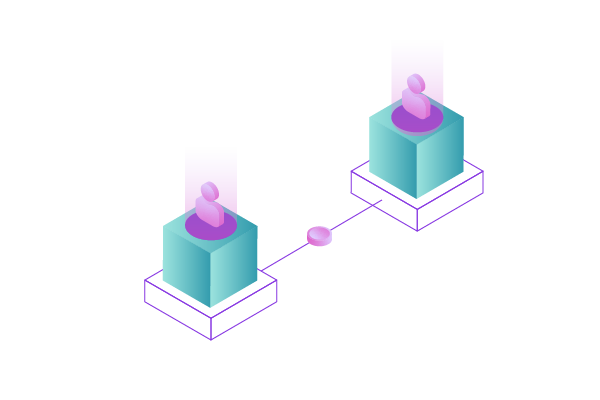
To understand the underlying architecture of a blockchain network, it’s essential to look at its fundamental building blocks, participants, and operational rules:
1. Blocks
A block serves as the primary data container within the network, permanently archiving a specific set of verified transactions. Conceptually, it functions much like a single page in a record book. Alongside the transactional data and a timestamp, every block contains two vital cryptographic elements: its own unique hash and the hash of the preceding block.
This hashing process is the ultimate auditor. It creates a complex code based entirely on the transactions inside. If a fraudster tries to change a single digit in an old payment, the fingerprint breaks. Because every block holds the previous block’s fingerprint, changing one past record means someone would have to rewrite the entire financial history that follows.
2. Nodes
Nodes are the individual computers or devices connected to the blockchain network that collectively maintain the ledger’s decentralized infrastructure by storing and sharing data. Whenever a new transaction is initiated, it’s broadcast to the network. Nodes then validate the transaction against the blockchain’s history to ensure its legitimacy.
Participation in this verification process is divided by storage capacity. Full nodes maintain a complete and exhaustive historical archive of the entire network. Lightweight nodes, however, retain only a limited subset of this data to optimize local storage constraints. When a transaction requires a comprehensive audit, these lighter nodes defer to the full nodes to confirm the historical accuracy of the records.
3. Miners
Within the compliance framework of a distributed network, miners act as independent transaction validators. They dedicate significant computational resources to audit proposed actions and formally append them to the ledger. Pending transactions initially reside in a network-wide holding pool. Miners select which transactions to process, typically favoring those with higher attached processing fees, and execute complex cryptographic proofs to validate the batch.
Upon successfully completing this mathematical proof, the miner is granted authority to permanently log the block into the official registry. In return for their resource usage, the protocol automatically distributes a set quantity of cryptocurrency. This self-sustaining reward mechanism is essential for operational stability; it regulates the proper creation of new digital assets while securing funding for the network’s continued security and auditing processes.
4. Consensus Mechanism
A consensus mechanism acts as the foundational constitution for a decentralized infrastructure. When you have a vast network of independent operators simultaneously reviewing public records, a rigid mathematical protocol is required to ensure they all arrive at the exact same, unified version of events. This automated agreement completely replaces the need for a central governing body to dictate the truth.
Different public ledgers utilize distinct methodologies to secure this agreement. The original model, Proof of Work, requires operators to expend significant computational energy to validate data, creating a massive economic barrier against systemic corruption. Moving toward sustainability, Proof of Stake selects validators based on collateralized digital assets rather than raw computing power, drastically reducing the network’s carbon footprint. Additional models like Delegated Proof of Stake and Proof of Authority provide tailored solutions for institutions prioritizing scalability and speed.
Also Read: 10 Best Blockchain Explorers to Consider in This Year
Blockchain vs Traditional Finance Comparison
Blockchain technology emerges as a new innovation in the financial industry. It exists without the need of centralized intermediaries and uses cryptography as a new way for verification.
Except for the difference mentioned above, there are also some more differences between blockchain and traditional finance.
The table below will help you understand those differences:
Feature | Traditional Finance | Blockchain Networks |
Control & Governance | Centralized authority (Banks, Governments) | Decentralized peer-to-peer network |
Transparency | Private ledgers, hidden from public view | Publicly visible and independently auditable |
Availability / Hours | Limited business hours (Mon–Fri, closed holidays) | 24/7/365 continuous network operation |
Settlement Speed | Slow (1–3 business days for clearing & wire) | Near-instant to minutes depending on network load |
Intermediaries | Multiple middlemen (Correspondent banks, brokers) | Direct peer-to-peer verified by protocol consensus |
Access & Inclusivity | Requires approval, credit history, and formal ID | Open/permissionless access with an internet connection |
Cross-Border Friction | High fees and complex currency conversion rules | Low relative fees and seamless global transferability |
Immutability | Records can be adjusted or reversed by administrators | Cryptographically locked and tamper-resistant records |
System Security | Single point of failure (central database breaches) | Distributed security resilient to centralized attacks |
This direct contrast highlights why blockchain is reshaping global finance—offering unprecedented operational efficiency, global accessibility, and tamper-resistant record-keeping.
Real-world Applications of Blockchain
While cryptocurrency is the most famous application, blockchain’s potential spans various sectors.
1. Supply Chain
- Traceability and Authenticity: One of the biggest challenges in the supply chain is tracing products back to their origin. Blockchain provides a transparent and immutable ledger, allowing every product’s journey to be recorded from its source to the end consumer. This ensures that products are genuine, and it can help in identifying and eliminating counterfeit goods.
- Efficiency and Cost Reduction: Traditional supply chains involve multiple intermediaries, which can slow down processes and increase costs. Blockchain can automate and streamline these processes, reducing the need for intermediaries and manual paperwork. This can lead to faster deliveries and reduced costs.
- Accountability: With every transaction being recorded on the blockchain, all parties in the supply chain can be held accountable. This can reduce fraud, theft, and mismanagement.
2. Healthcare
- Secure Patient Records: Healthcare institutions often struggle with maintaining secure and unified patient records. Blockchain can store patient data securely, ensuring that only authorized personnel can access it. This can reduce data breaches and unauthorized access.
- Drug Traceability: Counterfeit drugs are a significant concern in the healthcare industry. Blockchain can track drugs from manufacturers to patients, ensuring that they are genuine and safe.
- Research and Clinical Trials: Blockchain can provide a transparent and tamper-proof platform for recording clinical trial data, ensuring the integrity of research and fostering trust in the results.
3. Real Estate
- Transparent Transactions: Real estate transactions involve multiple parties, including buyers, sellers, agents, and banks. Blockchain can record every transaction transparently, ensuring that all parties have a clear understanding of the deal.
- Reduced Fraud: Property fraud, such as forging documents, is a concern in the real estate sector. Since data on the blockchain is immutable, it’s nearly impossible to forge or alter property documents.
- Efficient Property Management: For rental properties, blockchain can automate and streamline processes like tenant verification, rent collection, and maintenance management.
4. Voting
- Secure Voting Systems: Traditional voting systems are susceptible to manipulation and fraud. Blockchain can provide a secure platform where each vote is recorded transparently and immutably, reducing the chances of vote tampering.
- Remote Voting: Blockchain can facilitate remote voting, allowing citizens to cast their votes without physically being present at polling stations. This can increase voter turnout and make voting more accessible.
- Transparency and Trust: With every vote being recorded on a public ledger, citizens can verify that their votes were counted correctly, fostering trust in the electoral process.
Also Read: What Is a Crypto Bridge? The Key to Moving Assets Across Blockchains
The Future of the Blockchain System
As blockchain technology matures, its future extends far beyond digital currencies. We are moving toward a more interconnected and scalable decentralized ecosystem. Innovations like these are addressing early limitations around speed and environmental impact.
Furthermore, the integration of blockchain with Artificial Intelligence (AI) and the Internet of Things (IoT) promises to create autonomous, highly secure systems for automated supply chains, decentralized finance (DeFi), and digital identity management. In the coming years, blockchain will likely transition from a new technology to an invisible, foundational infrastructure powering global trust and digital interactions.
Conclusion
Understanding the answer to what is blockchain? is by knowing the real significance of blockchain technology. The difference lies in its ability to establish verifiable truth without relying on a central authority. By pairing cryptographic validation with a distributed network of independent nodes, the architecture creates an unshakeable framework where historical records cannot be quietly modified, forged, or erased. This structural shift from human-managed trust to mathematical proof is already changing how we think about data security across public and private sectors alike.
As these systems continue to evolve, the underlying ledger will eventually become an invisible layer of global digital infrastructure. Much like the basic protocols that run today’s internet, users will interact with these secure networks daily without needing to manage the underlying mechanics. Studying these core structures today gives us a clear framework for understanding how future digital systems will store value and verify facts.

I'm Carina, a passionate crypto trader, analyst, and enthusiast. With years of experience in the thrilling world of cryptocurrency, I have dedicated my time to understanding the complexities and trends of this ever-evolving industry.
Through my expertise, I strive to empower individuals with the knowledge and tools they need to navigate the exciting realm of digital assets. Whether you're a seasoned investor or a curious beginner, I'm here to share valuable insights, practical tips, and comprehensive analyses to help you make informed decisions in the crypto space.